Roux-en-Y gastric bypass is one of the longest-established weight loss operations in the world. Dr Amit Bhambri performs laparoscopic and robotic gastric bypass surgery in Ludhiana at Fortis Hospital. It is often recommended for people with severe acid reflux, type 2 diabetes or a high BMI.
What is Roux-en-Y gastric bypass?
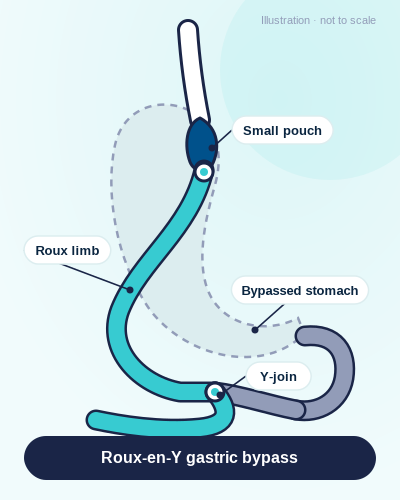
The surgeon makes a small stomach pouch, about the size of an egg, and connects it directly to the small intestine. The rest of the stomach and the first part of the intestine are bypassed, but not removed. A second join lets digestive juices from the bypassed part meet the food further down. The “Y” shape of these two joins gives the operation its name.
You feel full with small amounts of food, and changes in gut hormones reduce hunger and improve blood sugar control.
Who is it suitable for?
- BMI of 37.5 or more, or 32.5 or more with weight-related conditions (Asian criteria)
- Severe acid reflux (GERD) or a hiatal hernia, as the bypass usually relieves reflux
- Type 2 diabetes, high blood pressure, sleep apnea or fatty liver
- People with reflux after an earlier sleeve gastrectomy, as a revision operation
Gastric bypass needs lifelong vitamin supplements and regular follow-up. Smokers must stop smoking before and after surgery, as smoking raises the risk of ulcers at the join.
How the operation is done
- General anaesthesia and small keyhole cuts, or robotic assistance in selected cases.
- A small stomach pouch is created with a stapler.
- A limb of the small intestine is joined to the pouch (the first join).
- A second join reconnects the bypassed part lower down.
- Any hiatal hernia is repaired, and all joins are checked for leaks.
The operation usually takes about two to three hours.
Watch: how laparoscopic Roux-en-Y gastric bypass is done (animation)
Benefits of gastric bypass
- Significant long-term weight loss in many patients
- Usually relieves acid reflux and heartburn
- Strong effect on type 2 diabetes; many patients reduce or stop medicines
- Improvement in blood pressure, cholesterol and sleep apnea for many
- A well-studied operation with decades of long-term follow-up worldwide
Risks and possible side effects
- Bleeding, infection, leak and blood clots, as with any major surgery
- Ulcer or narrowing at the join between pouch and intestine
- Internal hernia (a twist of the bowel), which can occur months or years later and needs urgent attention
- Dumping syndrome: sweating, dizziness or loose stools after sweet or fatty food
- Vitamin and mineral deficiencies, especially iron, B12, calcium and vitamin D, without supplements
Knowing the warning signs and keeping up with follow-up visits helps catch problems early. The team explains these in detail before surgery.
Recovery timeline
| When | What to expect |
|---|---|
| Day of surgery | Short walks a few hours after the operation. |
| Day 1–3 | Clear liquids; most patients go home within a few days. |
| Week 1–2 | Liquid diet, gentle walking; desk work often possible after about two weeks. |
| Week 3–6 | Soft and pureed foods, then normal food in small portions. |
| Long term | Daily supplements, exercise and follow-up blood tests. |
Eating after gastric bypass
Food is introduced in stages over several weeks. Long term, eat three small meals and one or two protein-rich snacks, chew well, stop at the first sign of fullness and keep drinks separate from meals. Avoid sweets and sugary drinks to prevent dumping. The dietician gives you an Indian meal plan and checks your progress.
Cost of gastric bypass surgery in Ludhiana
Your package depends on the room category at Fortis Hospital and your health needs, and is given to you in writing after the consultation. Many insurance policies cover gastric bypass when it is medically needed. See the cost guide.
Gastric bypass with Dr Amit Bhambri
As a Senior Registrar and then Post-doctoral Fellow at AIIMS New Delhi, Dr Bhambri trained in bypass operations and was part of the live surgery demonstration team at national bariatric conferences. He has published research on reflux symptom scores in bariatric patients, which helps decide when a bypass is the better choice for someone with reflux.
Gastric bypass FAQs
Which is better for acid reflux: sleeve or bypass?
For people with significant reflux, a Roux-en-Y gastric bypass is usually preferred, because a sleeve can make reflux worse in some patients. Dr Bhambri decides after an endoscopy and a review of your symptoms.
What is dumping syndrome?
It is a reaction to sweet or very fatty food passing quickly into the intestine, causing sweating, a fast heartbeat, dizziness or loose stools. It is usually avoided by limiting sweets and eating slowly.
Is gastric bypass permanent?
It is intended to be permanent. Reversal is technically possible but rarely needed.
How long will I be off work?
Many people with desk jobs return in about two weeks. Physical work usually needs four to six weeks. Your team will advise you.
What is the difference between Roux-en-Y and mini gastric bypass?
Roux-en-Y has two joins and is preferred for reflux. Mini gastric bypass has one join and is a shorter operation. Both need lifelong vitamins. Read more about mini gastric bypass.