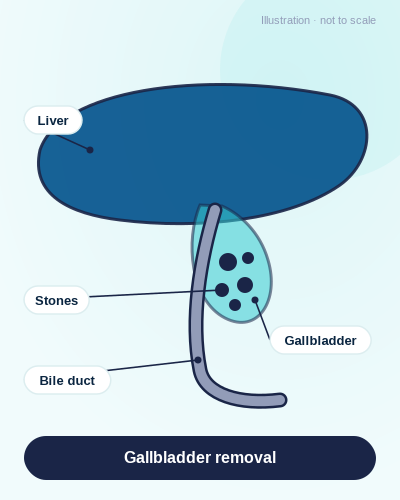
Gallbladder stones are a common cause of upper abdominal pain, especially after oily food. Dr Amit Bhambri performs laparoscopic cholecystectomy (keyhole gallbladder removal) in Ludhiana at Fortis Hospital. It is the standard treatment for gallstones that cause symptoms.
What are gallstones?
The gallbladder is a small pouch under the liver that stores bile, a fluid that helps digest fat. Gallstones form when substances in bile harden into stones. They are more common in women, in people with excess weight, after rapid weight loss, in diabetes and during or after pregnancy.
Symptoms of gallbladder stones
- Pain in the upper right or middle of the abdomen, often after meals, which may spread to the back or right shoulder
- Bloating, nausea or vomiting
- Fever with pain (infection of the gallbladder)
- Yellow eyes or skin, dark urine or pale stools (a stone blocking the bile duct)
Seek urgent care for severe pain that does not settle, fever with shivering, or yellow eyes. These can be signs of infection, pancreatitis or a blocked bile duct.
Does every gallstone need surgery?
Stones found by chance on an ultrasound, without symptoms, often do not need surgery straight away. When stones cause pain or complications, removing the gallbladder is usually advised, because medicines do not dissolve them reliably and attacks tend to come back.
Laparoscopic cholecystectomy
The operation is done under general anaesthesia through three or four small cuts. The surgeon carefully identifies the bile duct and blood vessels, then removes the gallbladder with the stones inside. It usually takes about an hour. Your body manages well without a gallbladder: bile flows directly from the liver into the intestine.
Tests before surgery
An ultrasound confirms the stones. Blood tests check the liver and pancreas. If a stone is suspected in the bile duct, an MRCP scan or an endoscopic procedure (ERCP) may be needed before or after surgery.
Recovery
- Most patients go home the same day or the next day.
- Walking and a light diet start on the day of surgery.
- Many people return to desk work within about a week.
- Avoid heavy lifting for a few weeks.
- Some people notice looser stools after fatty food for a while; this usually settles.
Risks
Laparoscopic gallbladder removal is a common, well-established operation. Possible risks include bleeding, infection, bile leak, injury to the bile duct (rare), and a retained stone in the bile duct. Occasionally the operation needs to be converted to open surgery for safety. Dr Bhambri’s MS thesis at IGMC Shimla, which won the Best Thesis award, studied liver function after laparoscopic gallbladder removal.
Gallstones and weight loss surgery
Rapid weight loss after bariatric surgery can lead to gallstones in some people. If you already have gallstones with symptoms, Dr Bhambri may remove the gallbladder at the same time as your bariatric operation.
Cost of gallbladder surgery in Ludhiana
The cost depends on the room category and whether additional procedures are needed. It is shared in writing after the consultation, and gallbladder surgery is commonly covered by health insurance.
Gallbladder surgery FAQs
Can I live normally without a gallbladder?
Yes. Most people live completely normal lives. Some notice looser stools after very fatty meals for a while.
Can gallstones be removed without removing the gallbladder?
Removing only the stones is not recommended, because new stones usually form again in the gallbladder.
What should I eat after gallbladder surgery?
Start with light, low-fat meals for the first few weeks, then return to a normal balanced diet. Limit very oily and fried food.
Is gallbladder surgery done by keyhole?
Yes, in almost all cases. Open surgery is needed only rarely, for safety.
Can gallstones come back after surgery?
Once the gallbladder is removed, stones cannot form in it again. Rarely, a stone can form or remain in the bile duct, which is treated by endoscopy.